Mastering Liquor Bottle Sizes for Your Home Bar Setup
Stocking a functional home bar is an art form that balances aesthetic appeal with practical utility. Whether you are an aspiring mixologist or someone who simply enjoys a well-made cocktail, understanding liquor bottle sizes is the secret to efficient inventory management. When you can identify exactly how much liquid is in a container, you gain better control over your budget, your drink consistency, and your overall preparation for hosting.
The Architecture of a Well-Stocked Bar
Organizing your spirits requires more than just picking bottles that look nice on a shelf. It requires a strategy based on your consumption habits and available storage space. A professional approach involves knowing exactly what you have in stock so you can avoid running out mid-cocktail or accumulating unnecessary bottles that take up valuable room. Efficient management keeps your mixing station clean and ready for action.
Understanding TTB Standards and Metric Measurements
The liquor industry operates under specific guidelines set by the Alcohol and Tobacco Tax and Trade Bureau, which emphasize consistency and consumer safety. You will notice that almost all modern spirit labels use the metric system, reflecting a shift toward global standardization. While many home bartenders are accustomed to thinking in imperial fluid ounces, the metric system is the gold standard for accuracy.
Learning to convert these units is essential for recipe precision. A standard shot in the United States is typically 1.5 ounces, which translates to approximately 44 milliliters. By familiarizing yourself with these equivalents, you can easily transition between international cocktail recipes and local barware. Keeping a quick reference chart near your workspace is a simple habit that helps you avoid over-pouring and ensures that your ingredient costs remain predictable.
The Historical Significance of the Fifth
Many drinkers are familiar with the term "fifth," a classic measurement that remains a cornerstone of the liquor industry. Historically, this term referred to one-fifth of a gallon, which is roughly 757 milliliters. Today, that has been rounded to the standard 750ml size found on almost every store shelf. This volume is widely considered the sweet spot for home consumption because it provides enough volume for multiple drinks while remaining compact enough for standard home cabinets.
When you calculate how many servings you can get from a standard 750ml bottle, you will find it yields about 17 standard pours. Understanding this ratio allows you to plan your purchases effectively. Whether you are buying bourbon, scotch, rum, or rye, the 750ml bottle serves as the reliable anchor of your inventory. This historical standardization connects your modern home bar to a long lineage of distilling traditions.
Essential Spirits and Volumetric Planning
To build a versatile home station, you should focus on a selection of core spirits. A strong foundation usually includes vodka, gin, tequila, and whiskey. From there, you can add modifiers like vermouth and liqueurs such as triple sec or coffee liqueur. When planning your inventory, consider the frequency with which you host guests.
If you find that certain spirits are used more often than others, it is helpful to keep a backup bottle on hand. However, keep in mind that not all spirits have the same shelf life once opened. While high-proof spirits remain stable for a long time, delicate modifiers like vermouth should be stored in the refrigerator and consumed within a reasonable timeframe. Tracking the proof and volume of your bottles ensures that you are always pouring high-quality ingredients.
Strategic Sizing for Every Occasion
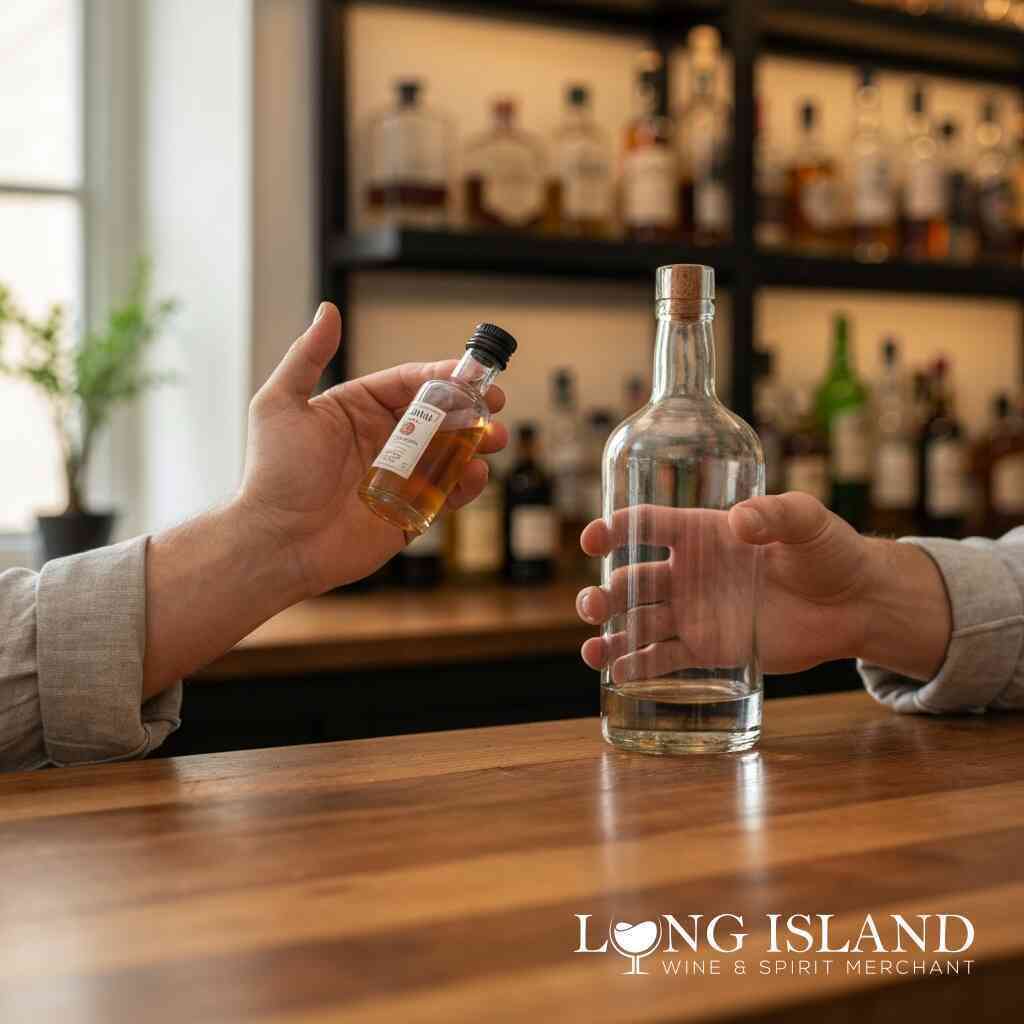
Beyond the standard 750ml bottle, the market offers a range of sizes to suit different needs. Miniatures, often called nips, are perfect for experimenting with new brands or creating samplers without committing to a full-sized bottle. On the other end of the spectrum, the large-format handle, which typically holds 1.75 liters, is an excellent value for spirits you use frequently in large batches or high-volume cocktail nights.
Choosing the right size is about matching your purchases to your lifestyle. If you frequently host large celebrations, the cost-efficiency of larger bottles is a smart economic move. Conversely, if you enjoy rotating through a wide variety of craft spirits, sticking to smaller or standard containers will keep your inventory fresh and prevent waste.
Final Thoughts on Bar Precision
Mastering your inventory is about more than just numbers; it is about respecting the craft of mixology. By knowing the exact volume of your ingredients and how they convert between systems, you gain the confidence to follow complex recipes and create your own balanced drinks. A professional home bar is a dynamic project that evolves with your personal tastes and the changing seasons. Keep your space organized, prioritize the quality of your ingredients, and enjoy the precision that comes with being a well-prepared home bartender.
Comparison of Liquor Bottle Sizes for Home Bar Inventory


Comments
Post a Comment