Pint vs Fifth: Liquor Bottle Sizes, Value and Uses
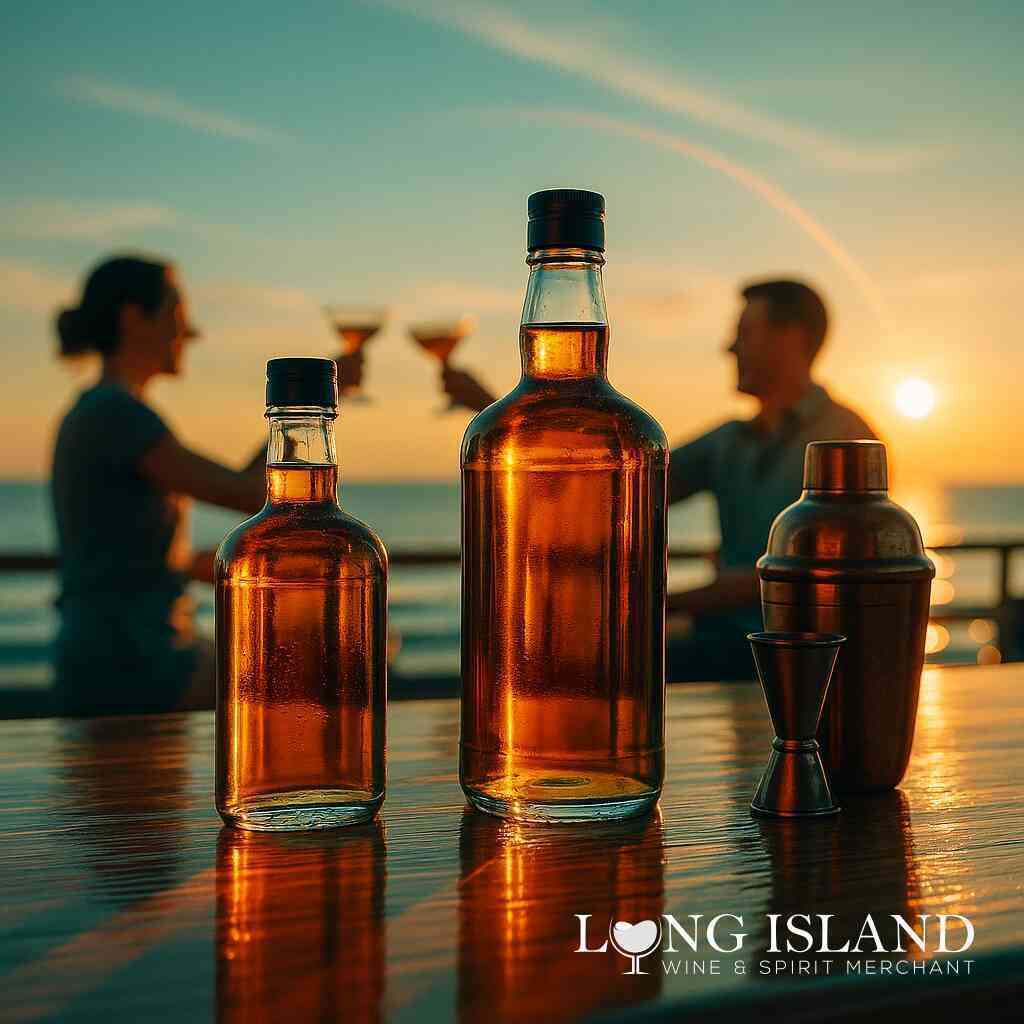
Pint vs Fifth at a Glance
Pint versus fifth remains one of the most common size questions in any spirits aisle. A pint holds 375 milliliters, while a fifth holds 750 milliliters. Knowing the difference affects how much you pour, what you spend, and even how you store your bottles.
Why the Debate Still Matters
On Long Island tailgates and living-room bars alike, people defend their favorite size with real passion. A pint feels personal and portable; a fifth feels economical for sharing. Both formats grew out of centuries of trial-and-error around measuring alcohol, and both still have clear roles today.
A Short History of the Two Sizes
Early taverns used jugs of every conceivable capacity. By the late 1800s the United States defined the “wine gallon,” and a bottle containing one-fifth of that gallon became the everyday standard for distilled spirits. When the country shifted to metric labeling, the fifth was set at a clean 750 mL. The pint was similarly standardized at 375 mL—exactly half a fifth—making bulk production, taxation, and international shipping far simpler.
Quick Size Reference
- Split (187 mL) – two small pours for tasting
- Pint (375 mL) – eight 1.5-ounce shots
- Fifth (750 mL) – sixteen 1.5-ounce shots
- Magnum (1.5 L) – two fifths in one bottle
- Handle (1.75 L) – party-friendly with a grip
Shelf Footprint and Portability
Pint Benefits
- Fits in small backpacks, coolers, or picnic baskets
- Stands around seven inches tall, roughly soda-can width
- Chills fast because of reduced glass mass
Fifth Benefits
- Sturdier base resists tipping on busy bar tops
- Tall neck allows precise free-pouring for cocktails
- Extra label space for distillers’ tasting notes or gift wrapping
If storage space is tight—a studio apartment cabinet or a boat galley—pints line up neatly with minimal wasted airspace. For a dedicated home bar, fifths look uniform on the back shelf and simplify inventory because most cocktail books quote fifth measurements for batching.
Cost Comparison: What You Pay per Ounce
Retail pricing always varies by brand, but cost per ounce is a useful guide. Divide shelf price by fluid ounces (12.7 oz in a pint, 25.4 oz in a fifth).
Example math:
- $18 pint → about $1.42 per ounce
- $28 fifth → about $1.10 per ounce
You save roughly 20–25 percent per ounce when stepping up to a fifth. That discount widens for value labels and shrinks for limited releases, yet the general rule holds: the bigger bottle is usually the better buy if you will finish it before quality drops.
Freshness and Waste
Higher volume means more oxygen exposure each time the cap comes off. Aromatic spirits—especially craft gins and peated whiskies—taste brightest within a few months of opening. If you drink infrequently or maintain a wide collection, a pint prevents half-empty bottles from gathering dust. For staple spirits you drain quickly, a fifth or larger still makes sense.
Entertaining Scenarios
- Dinner for Two – A pint pours four cocktails before dinner and four after, keeping portions moderate.
- Game-Day Party – One fifth of bourbon and one fifth of rye cover a round of highballs for eight friends with room for seconds.
- Camping Weekend – A pint of tequila packs easily in the food tote and empties by Sunday, so you carry less weight out.
Calculating Mixes Like a Pro
Most classic cocktails use 2 ounces of base spirit. Here is how many drinks you gain from each size:
| Bottle | Ounces | Two-Ounce Drinks |
|---|---|---|
| Pint | 12.7 | 6 |
| Fifth | 25.4 | 12 |
Shot-based math uses the 1.5-ounce standard. Replace numbers accordingly and you will still land on eight versus sixteen shots.
When to Choose a Pint
- Sampling a new distillery without committing full price
- Traveling where glass weight matters
- Gifting multiple varieties to one person (mini tasting set)
When to Choose a Fifth
- Stocking a core bar menu: vodka, gin, rum, tequila, whiskey
- Hosting gatherings of six or more people
- Aging cocktails in-bottle or infusing herbs, where extra headspace helps
Storage Tips for Either Size
- Keep bottles upright; cork contact with high-proof liquid can degrade flavor.
- Limit temperature swings. A dark cabinet away from the stove or radiator protects integrity.
- Use pour spouts only during service. Cap tightly the rest of the time to slow oxidation.
Frequently Asked Questions
Does alcohol content change with bottle size?
No. Proof is fixed by the distiller. A pint and a fifth of the same brand have identical ABV.
Are metric labels always exact?
Regulations allow tiny filling tolerances, but bottles must average the stated 375 mL or 750 mL across a production run.
What happened to quarts and half-gallons?
Legacy sizes faded after metrication because packaging lines modernized around liter measurements. Handles at 1.75 L essentially replaced the half-gallon for retail convenience.
Key Takeaways
- Pint equals half a fifth, perfect for personal use and rapid rotation.
- Fifth offers better value per ounce and matches recipe assumptions in most cocktail books.
- Choose based on consumption speed, storage space, and occasion size rather than habit alone.
Understanding pint vs fifth helps you budget intelligently, reduce waste, and serve guests with confidence. Next time you stand in front of a wall of bottles, a quick size check is all you need to grab the right tool for the job.
Pint versus Fifth Explained by Shop Liquor Bottle Sizes


Comments
Post a Comment