Choosing the Right Liquor Bottle Sizes for Long Island BBQs
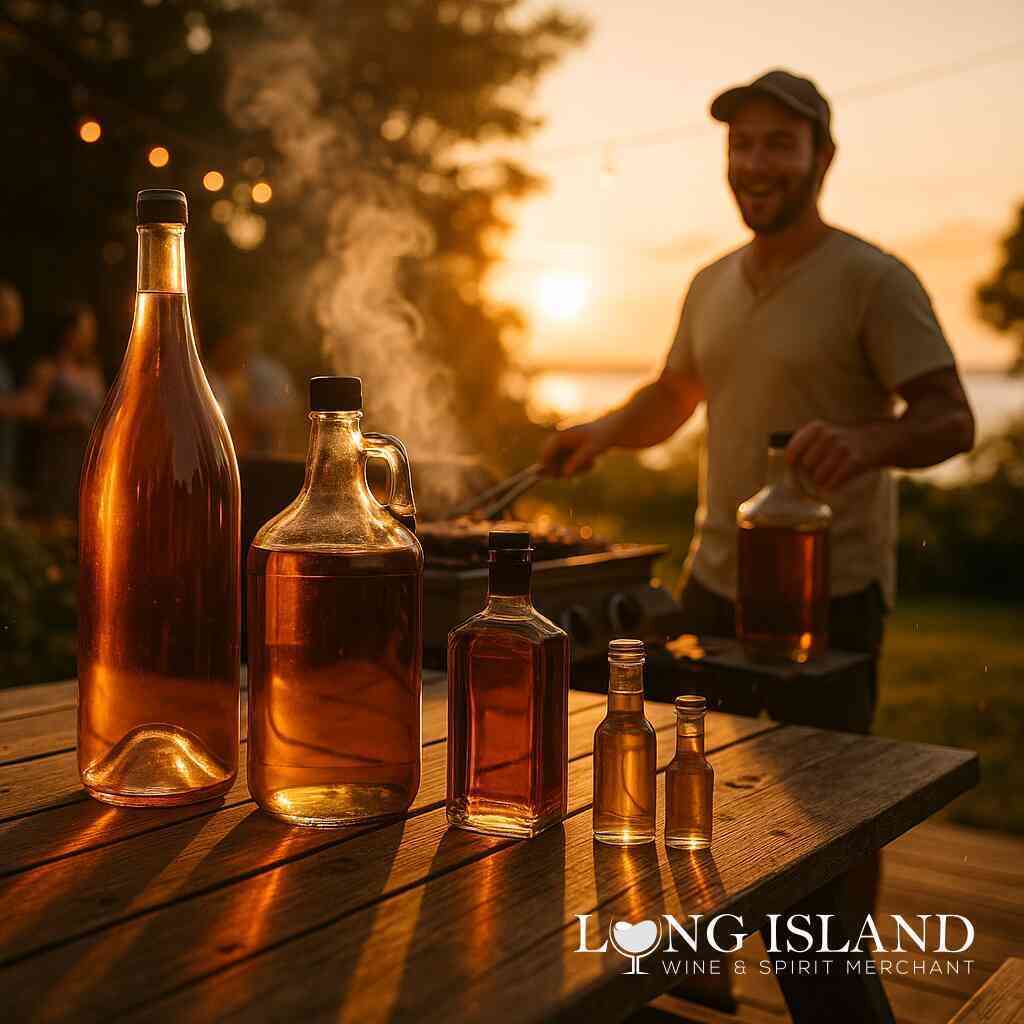
Long Island summers were made for smoky grills, salty breezes, and an easy-flowing bar. Yet many backyard hosts forget that the format of the bottle shapes the flow of the entire afternoon. This guide breaks down how different liquor bottle sizes influence cost, convenience, and the overall vibe of a Long Island barbecue.
Why Size Matters Behind the Grill
A cookout moves quickly. Steaks need flipping, kids want hot dogs, and friends roam from cornhole to fire pit. If the bar setup forces constant refills or runs dry mid-service, the host spends more time scrambling than celebrating. Selecting the right mix of minis, 750 ml workhorses, and larger party formats keeps pours steady without waste.
Crowd Psychology
• Large formats signal abundance. A magnum of rosé or a 1.75-liter tequila handle invites guests to pour freely and linger.
• Small formats encourage exploration. A tray of 50 ml minis lets curious drinkers sample mezcal, spiced rum, or craft gin without committing to a full pour.
• Familiar 750 ml bottles provide balance. They are easy to chill, fit standard pour spouts, and allow a quick quality check of what is left.
Matching vessel to mood controls pace naturally. Open one big bottle of bourbon and everyone gravitates to Old Fashioneds; scatter minis and conversation turns to tasting notes instead of rounds.
Efficiency and Cost
Per-ounce pricing usually drops as bottle volume climbs. Swapping three 750 ml bottles of vodka (about 75 ounces total) for one 1.75-liter handle (roughly 59 ounces) often lowers cost by 15–25 percent while freeing cooler space. Fewer glass changes also mean faster service and less recycling at the end of the night.
Calculating How Much to Pour
A simple rule of thumb starts with one standard drink per guest per hour. Adjust up if the menu leans spicy or if live music runs late into the evening.
- Estimate guests × hours × 1.25 (a buffer for heavier drinkers).
- Convert total ounces to bottles using the formats below.
Common Bottle Sizes at a Glance
| Size | Ounces | Typical Uses |
|---|---|---|
| Mini (50 ml) | 1.7 oz | Flight tastings, favors, responsible driving |
| Half Pint (200 ml) | 6.8 oz | Cocktail demos, niche spirits |
| Pint (375 ml) | 12.7 oz | Limited-edition whiskey, splits for couples |
| Standard (750 ml) | 25.4 oz | Bar workhorse, classic wine bottle |
| Liter (1000 ml) | 33.8 oz | High-volume mixers, bar programs |
| Handle (1.75 L) | 59.2 oz | Batch cocktails, punch bowls |
| Magnum Wine (1.5 L) | 50.7 oz | Rosé for the table, slower aging |
| Double-Magnum Wine (3 L) | 101.4 oz | Showpiece, large groups |
Example: 25 Guests, Four-Hour Cookout
- 25 guests × 4 hours = 100 drinks.
- Add 25 percent buffer → 125 drinks.
- 125 drinks × 1.5 oz average spirit per drink ≈ 188 oz.
One efficient split might be:
- Two 1.75-liter vodka handles (118 oz)
- One 750 ml tequila (25 oz) for margaritas
- One 750 ml bourbon (25 oz) for specialty cocktails
- A dozen 50 ml liqueur minis (20 oz) for creative toppers
Total: ~188 ounces, minimal leftovers.
Matching Bottle to Menu
Surf & Turf Showcase
• Magnum Napa cabernet pairs with char-broiled rib-eye. One bottle yields about 10 glasses.
• Standard 750 ml single-malt scotch stands ready for neat pours after dark.
Taco & Tequila Night
• Two 1-liter blanco tequilas anchor margarita pitchers.
• Half-dozen 200 ml mezcal bottles allow smoky flights without overpowering the bar.
Family-Friendly Picnic
• Liter of spiced rum for fruity punches.
• Assorted minis (vodka, nonalcoholic spirits) give designated drivers equal attention.
Temperature, Freshness, and Safety
Long Island humidity can sap spirits just as quickly as it wilts lettuce. Larger bottles fitted with flip-top spouts limit oxygen contact, slowing flavor loss during a six-hour event. Keep minis on ice or in shade to preserve volatile aromatics. Always label batched cocktails with the base spirit and an approximate ABV so guests make informed decisions.
Advantages of a Specialty Retailer
A store that focuses on bottle formats can save backyard hosts both time and money.
• Mix-and-match case pricing: Combine a rum handle, bourbon 750, and wine magnum in one discounted pick-up.
• Portion planning advice: Staff who understand per-ounce math help prevent surplus or shortage.
• Engraved minis: Small personalization turns samples into memorable take-home gifts.
• Local delivery windows: Same-day drop-off keeps seafood, produce, and beverages cold without leaving the grill unattended.
Practical Tips for Seamless Service
- Pre-batch one signature drink in a two-gallon beverage dispenser; reserve a handle-sized backup spirit nearby.
- Stage mini bottles in a separate cooler with sodas and sparkling water so tasters can mix at their own pace.
- Use jiggers or pour spouts on 750 ml and liter bottles to maintain consistent strength.
- Recycle on the fly: Place a clear bin near the bar for empty glass. Smaller footprint means fewer mystery bottles abandoned on tables.
- End-of-night check: Seal and label any open handles, then store in a cool, dark place for the next gathering.
Final Thought
Selecting the ideal liquor bottle sizes is less about guessing and more about strategy. The right combination reduces cost, limits waste, and keeps the grill master free to focus on perfect sear marks. With a little math and a reliable retailer, any Long Island host can elevate a casual cookout into a well-orchestrated summer highlight.
Best Bottle Size for LI BBQs via Shop Liquor Bottle Sizes


Comments
Post a Comment