Decoding Vodka Purity: Inside Liquor Store Open’s Testing
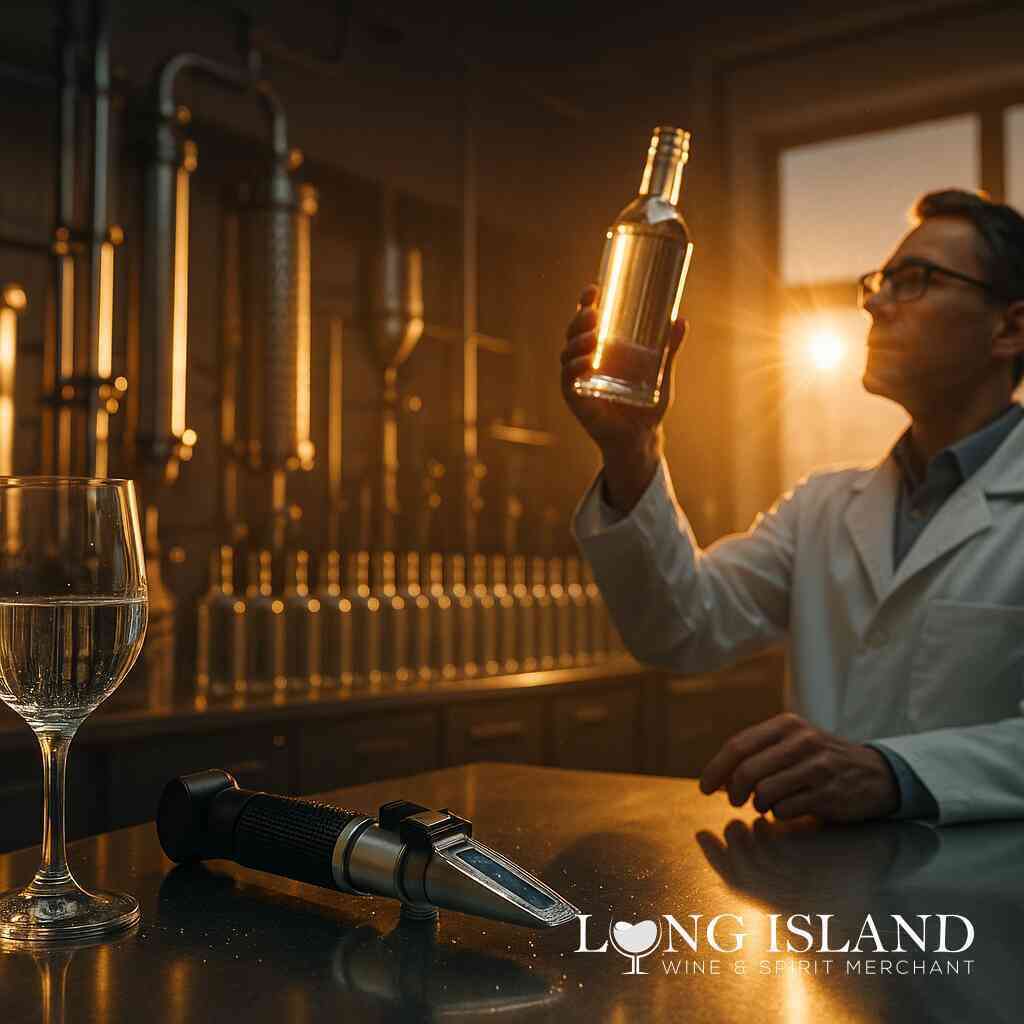
Why Vodka Purity Is More Than a Marketing Claim
Most vodka labels promise crystal-clear character, yet only a few bottles achieve laboratory-grade neutrality and a pleasant, smooth finish. This overview explains the step-by-step process Liquor Store Open follows to confirm that every vodka on its shelf or shipping dock meets a high, measurable purity standard.
From Field to Fermenter: The First Checkpoint
Purity starts long before distillation. Winter wheat, rye, corn, or potatoes must deliver consistent starch levels and minimal microbial contamination.
- Grain sampling: Incoming grain lots are screened for moisture, mold spores, and protein content. Even minor spoilage can translate into off aromas after fermentation.
- Water analysis: Distillers submit water reports showing mineral balance and absence of heavy metals. Calcium and magnesium give mouthfeel, but excessive iron dulls clarity.
- Yeast culture verification: Pure, single-strain yeasts reduce the risk of fusel alcohols that can add harshness.
By understanding each producer’s raw-material protocol, the Commack team can predict which vodkas deserve closer attention later in the chain.
Controlled Fermentation: Preventing Congeners Early
Fermentation temperature is a critical lever. When mash warms past roughly 90 °F, yeast stress rises and fusel oils spike. Liquor Store Open reviews fermenter logs looking for:
- Tight temperature ranges (usually 75 – 82 °F).
- Short lag times between pitching yeast and active ferment, signaling healthy nutrient balance.
- pH curves that stay near 4.0, keeping bacterial contamination in check.
A well-managed ferment produces a beer that distills cleanly, saving the distiller—and later, the retailer—from heavy filtration demands that can strip mouthfeel.
Distillation Profiles: Reading the Still Like a Chart
Whether a vodka runs through a towering column still or a small copper pot, heat management separates pure ethanol from unwanted components. The Commack lab requests or inspects:
- Reflux ratios: High reflux means more redistillation inside the column, boosting purity.
- Plate temperatures: Uniform readings prevent methanol or aldehydes from leaking into the hearts cut.
- Take-off timing: Heads and tails cuts recorded to the second show whether the operator sacrificed yield for cleanliness—a good sign.
Filtration and Proofing: Where Neutrality Meets Texture
Once distillation ends, most vodkas undergo carbon filtration and dilution with de-ionized water.
- Activated carbon flow rate: Too fast, and trace esters remain; too slow, and the spirit can taste flat.
- Final proof water: Conductivity meters verify that dilution water is mineral-balanced within one part per million of specification, preventing haze.
- Resting time: Spending at least 48 hours in stainless tanks allows the alcohol-water matrix to stabilize, creating a silkier palate.
In-House Laboratory Testing: Numbers That Matter
Liquor Store Open does not stop at reviewing producer paperwork. Every incoming vodka lot is tested in Commack before reaching inventory.
Gas Chromatography (GC)
GC scans show ester, aldehyde, and fusel peaks down to parts per billion. A clean vodka presents a low, flat baseline with only ethanol and water peaks clearly dominant.
Ultraviolet (UV) Clarity Scan
A UV beam passes through the spirit at 275 nm. Any particulate haze scatters light and triggers a fail. This quick test often picks up cork dust or micro-sediment invisible to the eye.
Density and Alcohol Proof Check
Digital density meters confirm that label proof matches the theoretical ethanol-water curve at 20 °C. Variances greater than ±0.1 % ABV prompt a hold.
Sensory Evaluation: The Human Element
Numbers verify purity, but the palate decides appeal.
- Neutral backdrop lighting: Tasters sit under red bulbs so color cues cannot bias perception.
- Nose first, then palate: Aromas should be faint—perhaps soft grain or clean linen—but never solvent-like.
- Texture focus: Top vodkas feel creamy, not watery, even at 40 % ABV. A short, slightly warming finish is welcome; harsh burn is not.
Panel scores combine with lab data. A bottle must pass both to earn shelf space or shipping clearance.
Warehouse Integrity: Protecting Purity After Arrival
Purity can be lost after bottling if handling is sloppy. Liquor Store Open maintains:
- Controlled temperature zones between 60 – 70 °F.
- Humidity balance near 50 % to keep corks from drying.
- Shock-absorbing packaging selected for spirits, not wine, so bottles arrive without micro-fractures that could lead to slow oxidation.
What Shoppers Gain From the Process
- Predictable flavor: A repeatable testing routine means the same bottle tastes the same every time you revisit it.
- Transparency: Tasting notes list objective data—filtration method, grain source, and observed congener levels—helping customers compare styles.
- Confidence in shipping: The bottle that leaves Commack is verified identical to the one that scored high in the lab.
Key Takeaways
- Vodka purity is built on clean grain, balanced water, controlled fermentation, and precise distillation.
- Objective lab tools—GC, UV scanning, density meters—reveal flaws long before a cork is popped.
- Sensory panels ensure that a technically pure vodka also delivers texture and subtle character.
- Rigorous warehouse and shipping protocols protect that purity until the moment the customer breaks the seal.
When these steps align, clarity is no longer a marketing slogan; it is a documented chain of custody from field to glass. Liquor Store Open’s multilayered approach sets a practical benchmark for anyone serious about serving or collecting truly neutral, elegant vodka.
How Liquor Store Open deciphers vodka purity for tasters


Comments
Post a Comment