Choosing the Best Liquor Bottle Sizes for Commack Winter
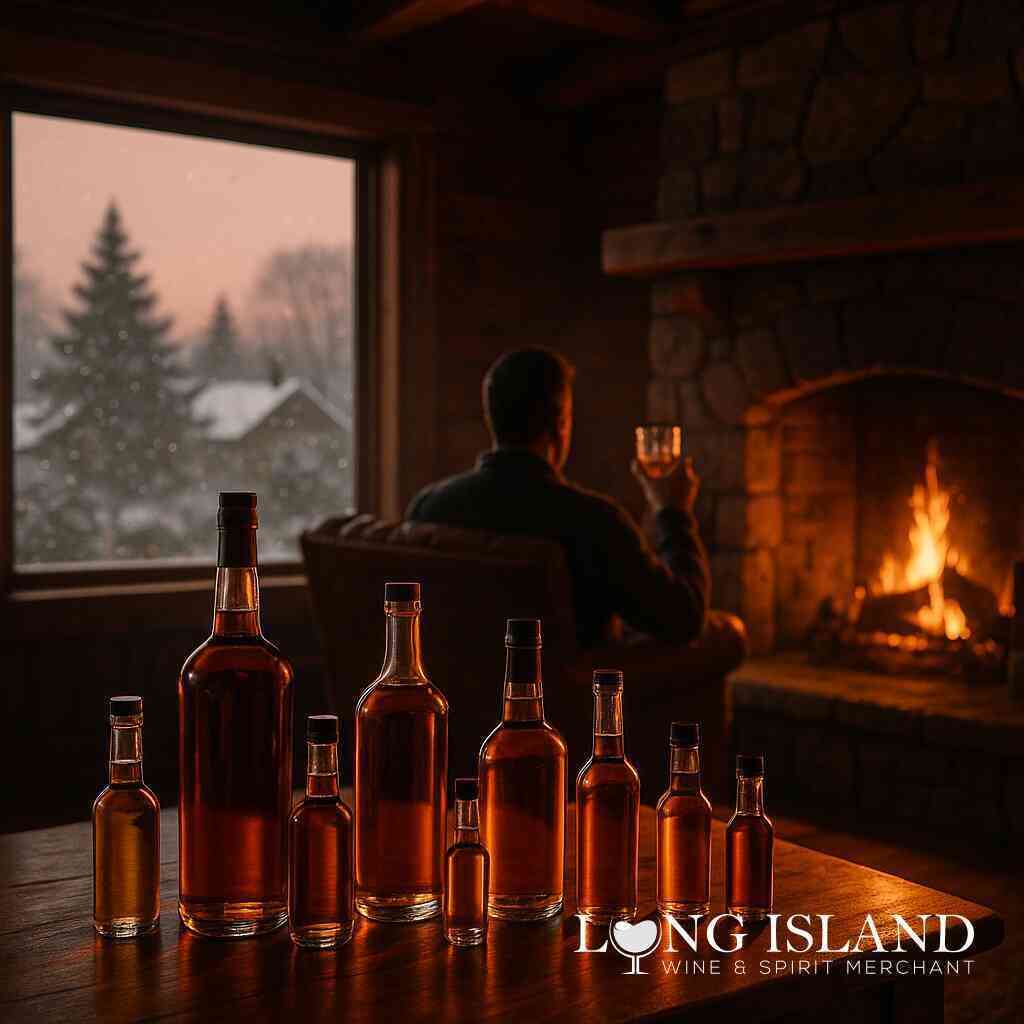
Commack Winter Hosting Starts With the Right Bottle Size
A Long Island cold snap changes how spirits are served. Crackling fireplaces, playoff marathons, and surprise snow-days all last longer than a typical June barbecue, so the volume of each bottle matters as much as its mash bill. This guide breaks down common liquor bottle sizes—from 50 ml minis to 1.75 L handles—and explains when each format shines for a Commack winter gathering.
The Everyday Benchmark: 750 ml (the “Fifth”)
- Around 16 two-ounce pours
- Fits on any bar cart or refrigerator door
- Widest selection across whiskey, rum, tequila, and liqueurs
For many households a single 750 ml bottle anchors an entire weekend. It offers enough volume for a tasting flight or several rounds of cocktails without risking oxidation over months. Because distributors treat this as the default size, craft and limited releases almost always appear in the fifth. When you want variety—say a rye for Old-Fashioneds and a mezcal for smoky Margaritas—two different 750s take up minimal shelf space while keeping choice on the menu.
Upsizing Without the Bulk: 1 Liter
- About 21 standard pours
- Same neck diameter as a 750 ml, so existing pour spouts work
- Better cost-per-ounce while staying budget-friendly
A one-liter bottle is the quiet workhorse of snow-day hospitality. It slides into the refrigerator rack like a fifth, but the extra five shots mean fewer mid-game store runs. If you know guests will ask for repeated highballs—vodka sodas, rum-and-Cokes, or G&Ts—the liter keeps the party moving without committing to handle size storage.
The Party Statement: 1.5 L Magnum
- Roughly 32 two-ounce pours
- Visually dramatic; ideal for holiday tables and photo ops
- Requires more chilling space and a sturdy pour
Pulling out a magnum instantly signals celebration. The wider surface area also lets table wine or batched cocktails open up gracefully as the evening progresses. Just remember that a 1.5 L bottle weighs nearly twice as much as a fifth; practice a two-handed grip before you attempt the first pour over Grandma’s white tablecloth.
The Crowd-Saver: 1.75 L Handle
- Around 37 shots—enough for a full playoff double-header
- Built-in handle improves control when pouring into shakers or punch bowls
- Lowest price per ounce on most mainstream labels
Handles make sense when quantity trumps experimentation. A single 1.75 L of bourbon can fuel spiked hot chocolate for a sledding crew or batch Manhattans for an entire Friendsgiving. The trade-off is commitment: unless your household regularly uses that spirit, leftover volume may linger until spring.
The Intimate Option: 375 ml Half Bottle
- Eight two-ounce pours
- Reduces waste when trying premium or flavored expressions
- Fits easily in a jacket pocket for outdoor bonfires
Half bottles shine on quiet snow nights when only two friends brave icy roads. A smaller cork surface limits oxygen exposure, preserving nuance on delicate gins, vermouths, or cream liqueurs. They also encourage exploration; splitting a pair of 375s lets drinkers compare styles without the cost of two full fifths.
Tiny but Mighty: 50 ml–200 ml Minis
- Perfect for stocking stuffers, tasting flights, or road-legal transport to ski cabins
- Allow guests to sample unusual amari, bitters, or cask finishes
- Virtually no leftovers, so storage is a non-issue
These pocket-sized options transform a simple gathering into a guided tasting. Arrange four 50 ml whiskeys by proof or region and let guests rank favorites. Because each mini equals just one or two pours, there is minimal financial risk if a flavor falls flat.
Matching Size to Scenario
| Winter Moment | Recommended Size | Why It Works |
|---|---|---|
| Quiet fireside night for two | 375 ml | Enough for several neat pours without waste |
| Game-night with six guests | 1 L | Extra volume, still compact |
| Holiday dinner for twelve | 1.5 L | Dramatic presentation, continuous service |
| Sledding day punch bowl | 1.75 L | Lowest cost per ounce, built-in handle |
| Tasting new limited release | 750 ml | Standard format, widest availability |
Storage Tips for Cold-Weather Spirits
- Avoid temperature swings. Moving bottles from a garage below freezing to a 72 °F kitchen can stress corks. Keep core stock indoors.
- Allow headroom in the freezer. Vodka and some gins can be stored at ‑5 °F without issue, but sugary liqueurs may thicken or crack glass.
- Label open dates. Winter hibernation occasionally hides bottles behind cocoa mix. Marking the month on the back label reminds you what to finish first.
Budget Considerations
Price spreads widen as bottle size increases, yet larger is not always cheaper if half the liquid sits untouched. Before grabbing a handle, estimate realistic consumption:
• Multiply planned cocktails by two ounces to gauge required volume.
• Add 10 % for unplanned top-offs—snowstorms extend parties.
• Compare liter versus handle pricing on the same brand; the liter may offer easier storage for only a slight premium per ounce.
Quick Reference Cheat-Sheet
- 50 ml = 1 shot
- 200 ml = 4 shots (half-pint)
- 375 ml = 8 shots (pint)
- 750 ml = 16 shots (fifth)
- 1 L = 21 shots
- 1.5 L = 32 shots (magnum)
- 1.75 L = 37 shots (handle)
Final Pour
Commack’s long winter rewards hosts who match bottle volume to occasion. A thoughtfully chosen size keeps cocktails flowing, reduces waste, and spares a white-knuckle drive across icy parking lots. Whether you are sampling a new craft rye in a 375 ml or unveiling a holiday magnum, the right capacity turns a simple drink into a memorable seasonal ritual.
Compare Commack Winter Sizes with Shop Liquor Bottle Sizes


Comments
Post a Comment