Long Island Wine Food Pairings: 2025 Practical Guide
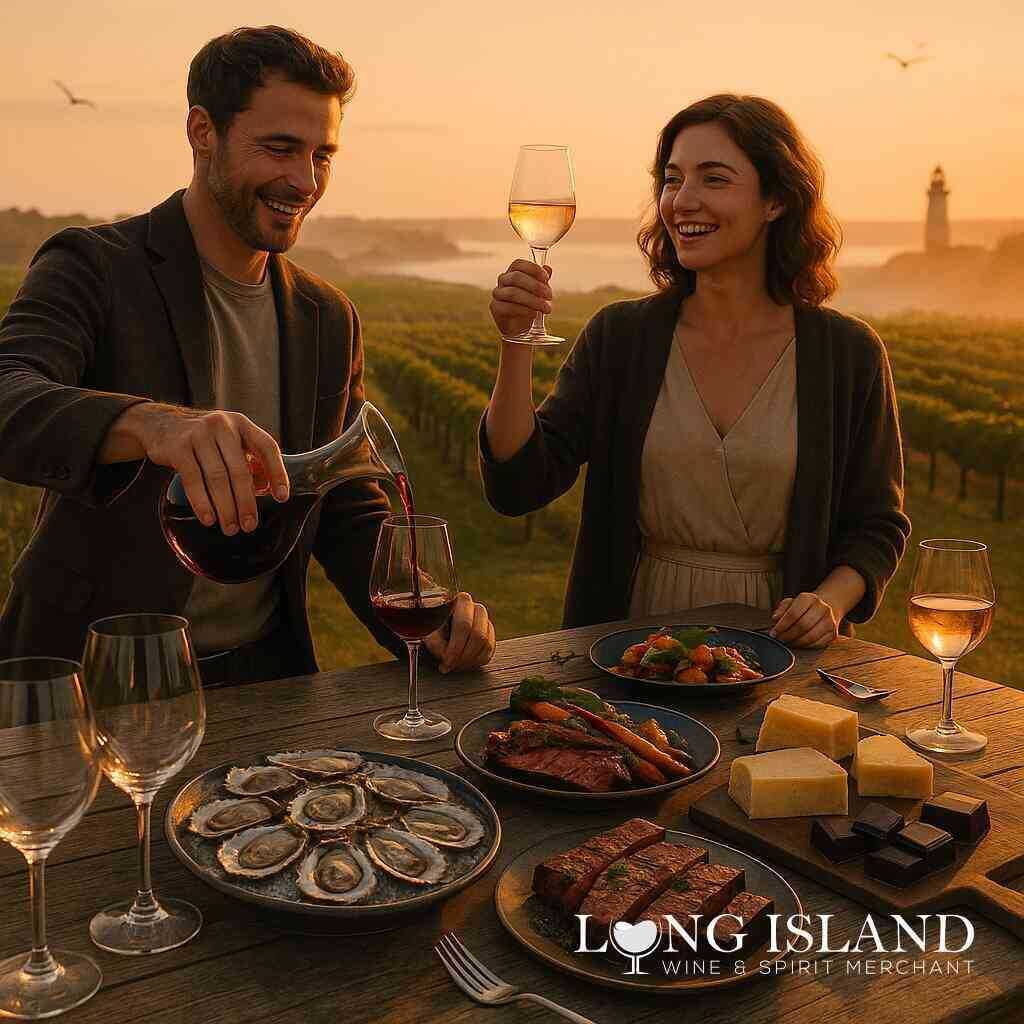
Mastering Pairings the Long Island Way
Finding the right wine for dinner does not have to be complicated. This guide explores practical wine food pairings using bottles that showcase Long Island terroir and styles that suit today’s diverse menus.
Start With Personal Taste, Not Rules
Classic pairing charts can feel rigid. A quicker path is to think about the flavors you already enjoy:
- Sweetness – Do you crave a hint of residual sugar, or do you prefer bone-dry?
- Acidity – Bright, mouth-watering whites cut through rich dishes, while lower-acid wines feel softer and rounder.
- Aroma – Citrus, herbs, stone fruit, baking spice, or earth each speak to different food partners.
Answering those three points creates a mental “flavor profile” that makes any shelf of bottles easier to navigate.
Understanding Long Island Terroir
Long Island’s two forks sit between the Atlantic and the Sound. Sand, gravel, and maritime breezes combine to give grapes moderate alcohol, fresh acidity, and subtle salinity. That translates into food-friendly structure across almost every style.
- North Fork: Cooler nights preserve Sauvignon Blanc’s grapefruit snap and Cabernet Franc’s herbal lift.
- South Fork: Slightly warmer pockets nudge Merlot and Chardonnay toward riper stone-fruit notes.
- Hamptons AVA: Sea spray adds a mineral edge that shines with shellfish.
Knowing these differences helps predict how a bottle will behave on the table without opening it first.
Quick Pairing Matrix
| Dish Style | Reliable Long Island Choice | Why It Works |
|---|---|---|
| Raw oysters, clams | Sauvignon Blanc | High acidity mirrors lemon, saline notes echo the sea |
| Veggie-forward appetizers | Dry Rosé | Berry aromas complement produce; light tannin stays refreshing |
| Roasted poultry | Unoaked Chardonnay | Round texture matches juicy meat, citrus keeps the plate lively |
| Grilled steak | Bordeaux-style Merlot blend | Dark fruit and moderate tannin stand up to char and fat |
| Spicy tacos | Off-dry Riesling | Touch of sweetness tames heat while lime-like acid brightens |
Building a Dinner Party Flight
A well-paced progression lets guests experience contrasts without palate fatigue.
- Sparkling Rosé on Arrival
Tiny bubbles wake up taste buds and pair with anything from cheese straws to shrimp cocktail. - Lean, Zesty White with the First Course
Sauvignon Blanc cleanses between bites of crudo or citrusy salads. - Textured White or Rosé Mid-Meal
An unoaked Chardonnay or Provençal-style Rosé bridges the gap to richer dishes. - Structured Red for the Main
Merlot-dominant blends suit lamb chops, braised short ribs, or mushroom ragù. - Late-Harvest or Fortified Finale
Serve alongside blue cheese, dark chocolate, or spiced nuts.
Chill whites to about 45 °F, let reds warm toward 60 °F, and always pour lighter styles first.
Spotlight Pairings
Long Island Seafood & Sauvignon Blanc
Salt air influences both the seafood and the vines. A briny oyster makes a Sauvignon Blanc’s wet-stone edge pop, while the wine’s lime and grapefruit keep buttered lobster from feeling heavy. Serve in narrow, tulip-shaped stems to focus the gentle aromatics.
Farm-to-Table Vegetables & Dry Rosé
Beets, heirloom tomatoes, and grilled zucchini all love Rosé’s strawberry and watermelon flavors. The wine’s subtle tannin scrubs earthy notes off the tongue, making each bite taste as fresh as the first. The pale salmon hue also adds visual harmony to multi-colored platters.
Steakhouse Nights & Cabernet-Forward Blends
For rib-eye or porterhouse, reach for a Meritage-style red led by Cabernet Sauvignon. Long Island versions rarely hit the excessive alcohol levels found in warmer regions, so the pairing feels balanced rather than overpowering. Decant for thirty minutes to soften tannins, then pour alongside rosemary-infused compound butter.
Tips for Stress-Free Selection
- Shop Local Sections First: Regional bottles are typically organized by variety, making comparison quick.
- Read the Back Label: Many Long Island producers print tasting notes and suggested foods right on the bottle.
- Buy Two of a Favorite: One for tonight, one to track how the profile evolves in a year.
- Keep Notes: A simple phone photo of the label and a few words like “great with salmon; crisp, not sweet” builds a personal pairing library over time.
Serving Temperature Cheat-Sheet
- Sparkling: 40 – 45 °F
- Crisp Whites & Rosé: 45 – 50 °F
- Full-Bodied Whites: 50 – 55 °F
- Light Reds: 55 – 60 °F
- Structured Reds: 60 – 65 °F
A ten-minute rest on the counter can turn a muted cold wine into an expressive one, while a quick ice bucket will rescue an overheated bottle.
Common Myths, Debunked
- “Red wine must stay at room temperature.”
Modern indoor temps often exceed ideal service. Slight chill brings out freshness. - “White wine can’t handle meat.”
Try aged Chardonnay with roast pork—the depth of flavor stands up easily. - “Sweet wines are only for dessert.”
Off-dry Riesling can be the hero with Thai curry or hot wings.
Final Sip
Long Island’s diverse microclimates offer a bottle for nearly every plate. By focusing on your flavor preferences, acknowledging the region’s natural acidity, and pacing the meal from light to bold, wine food pairing becomes less about memorizing rules and more about confident experimentation. Pour, taste, adjust, and enjoy the conversation that follows.
Mastering Wine Food Pairings with LI Wine Merchant


Comments
Post a Comment