Crafting Long Island Chardonnay: From Coastline to Cellar
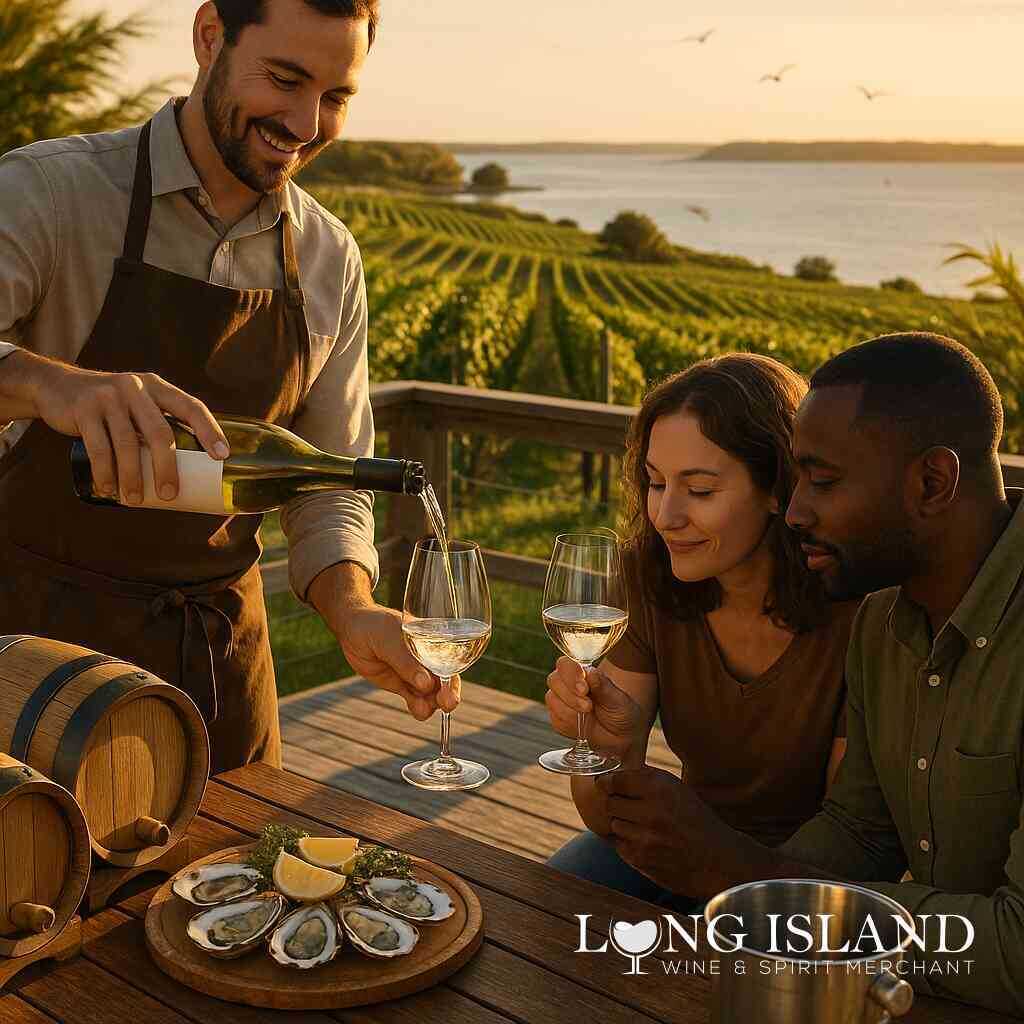
Why Long Island Chardonnay Stands Apart
Long Island sits between the Atlantic Ocean and Long Island Sound, a position that moderates summer heat and extends the growing season. Cool nights, salty breezes, and well-drained sandy loam give local Chardonnay a bright spine of acidity alongside precise orchard-fruit flavors. This guide looks at how an experienced Long Island wine merchant translates that coastal character into a memorable bottle-shop experience.
Reading the Maritime Climate in Every Vintage
- Gentle ripening curves – Daily sea winds prevent heat spikes that can flatten flavors. Grapes develop slowly, preserving malic acid while building concentrated sugars.
- Salt-laden air – Trace minerals from ocean spray settle on leaves and soil, later surfacing as subtle saline notes often described as “wet stone” or “sea mist.”
- Harvest timing – Growers watch for a narrow window: ripe enough for depth, but early enough to keep alcohol in check. Merchants track these decisions to predict style and aging potential.
Merchants who walk the rows with growers can explain why a 2025 bottling feels lean and citrus-driven while the previous release showed riper pear tones. Shoppers gain context, not just tasting notes.
Vineyard Practices That Shape Cool-Climate Style
Sustainable Canopy Management
Long Island’s humidity encourages mildew, so growers leaf-pull early, improving airflow and sun exposure. Minimal spraying keeps residues low and flavor purity high. Retail staff can point out which labels follow organic or low-input programs, guiding customers who value eco-responsible wines.
Soil Diversity in a Compact Region
Within a single estate you might find beach-sand ridges, gravel lenses, and heavier clay pockets. Merchants often commission micro-lot bottlings from favored blocks—morning-sun parcels for racy stainless styles, west-facing rows for richer oak-aged cuvées. Limited case counts reinforce the sense of place and scarcity.
In-Store Curation: Turning Browsing Into Discovery
A Three-Glass Flight That Rewrites Expectations
- Stainless-fermented – Pale straw, green apple, lime zest. No oak, pure shoreline lift.
- Lightly oaked – Subtle vanilla, baked pear, still brisk on the finish.
- Barrel-fermented reserve – Toasted hazelnut, honeyed citrus, broad texture yet balanced by Atlantic freshness.
Presenting the flight in this order teaches newcomers that “buttery” is a choice, not a Chardonnay rule.
Sensory Tools on the Shelf
- Color swatches: lemon-green to deep gold illustrate oak influence.
- Aroma wheels: orchard, floral, spice, mineral categories spark vocabulary.
- Texture scale: crisp → creamy helps buyers match wine to seafood, poultry, or cheese.
These quick visuals empower shoppers to build a mixed case with confidence.
Pairing Guide for Local Palates
| Dish | Preparation Tip | Chardonnay Style |
|---|---|---|
| Peconic Bay oysters | Raw with mignonette | Stainless, high acidity |
| Montauk striped bass | Pan-seared, lemon butter | Lightly oaked |
| Roast turkey | Herbs, root vegetables | Medium oak, partial malo |
| Butternut squash risotto | Sage, brown butter | Fuller reserve bottling |
A merchant who stocks cheese and charcuterie can place pairing cards next to triple-cream brie, smoked bluefish pâté, or local goat cheese, completing the coastal theme.
Small-Batch Oak Regimens Explained
French barrels come in multiple sizes. Long Island winemakers often favor 500-liter puncheons. The larger volume softens oak impact, allowing citrus notes to remain vivid. Some estates blend a portion aged in neutral barrels to lift aromatics. Merchants label these percentages so collectors know what to expect in the glass today and after five years of cellaring.
From Tasting Room Storytelling to Home Delivery
A well-run bottle shop mirrors the hospitality of a vineyard tasting room:
- Rotating estate spotlights – One producer each month gets a front-window display, map, and by-the-glass pour.
- Grower meet-and-greets – Casual Q&A sessions let customers ask why a winemaker chose wild yeast or blocked full malolactic conversion.
- Educational packs – Three- or six-bottle sets that progress from lean to lush illustrate the impact of barrel choices.
Local delivery services extend that experience. Detailed tasting cards and food tips travel with every order, so the story continues at the dinner table.
Storing and Serving Tips for Peak Enjoyment
- Temperature – Keep bottles around 55 °F in a dark space. Avoid kitchen countertop fluctuations.
- Glassware – A moderately sized tulip bowl concentrates subtle mineral scents better than a wide Chardonnay “fishbowl.”
- Serving chill – Pour stainless styles at 45 °F; fuller, oak-aged bottles show best closer to 50 °F.
- Aging window – Fresh, unoaked versions shine within three years. High-quality barrel selections can reward five to seven years of cellaring, developing hazelnut and brioche complexity.
Key Takeaways
- Long Island’s maritime climate underpins lively acidity and nuanced salinity in Chardonnay.
- Sustainable vineyard choices—leaf pulling, cover crops, minimal irrigation—protect both environment and flavor.
- A knowledgeable merchant bridges vineyard and consumer through curated flights, clear shelf education, and producer storytelling.
- Matching style to menu is straightforward when you read acidity, oak profile, and texture scales provided by the shop.
Exploring Long Island Chardonnay through a trusted local merchant offers more than a bottle. It gives a direct line to the winds, soils, and human hands that define this distinctive coastal wine culture.
How Long Island Merchant Crafts Unique Chardonnay Experiences


Comments
Post a Comment