Complete Sparkling Wine Pairing Guide for Hanukkah 2025
Elevating Eight Nights With Sparkling Wine
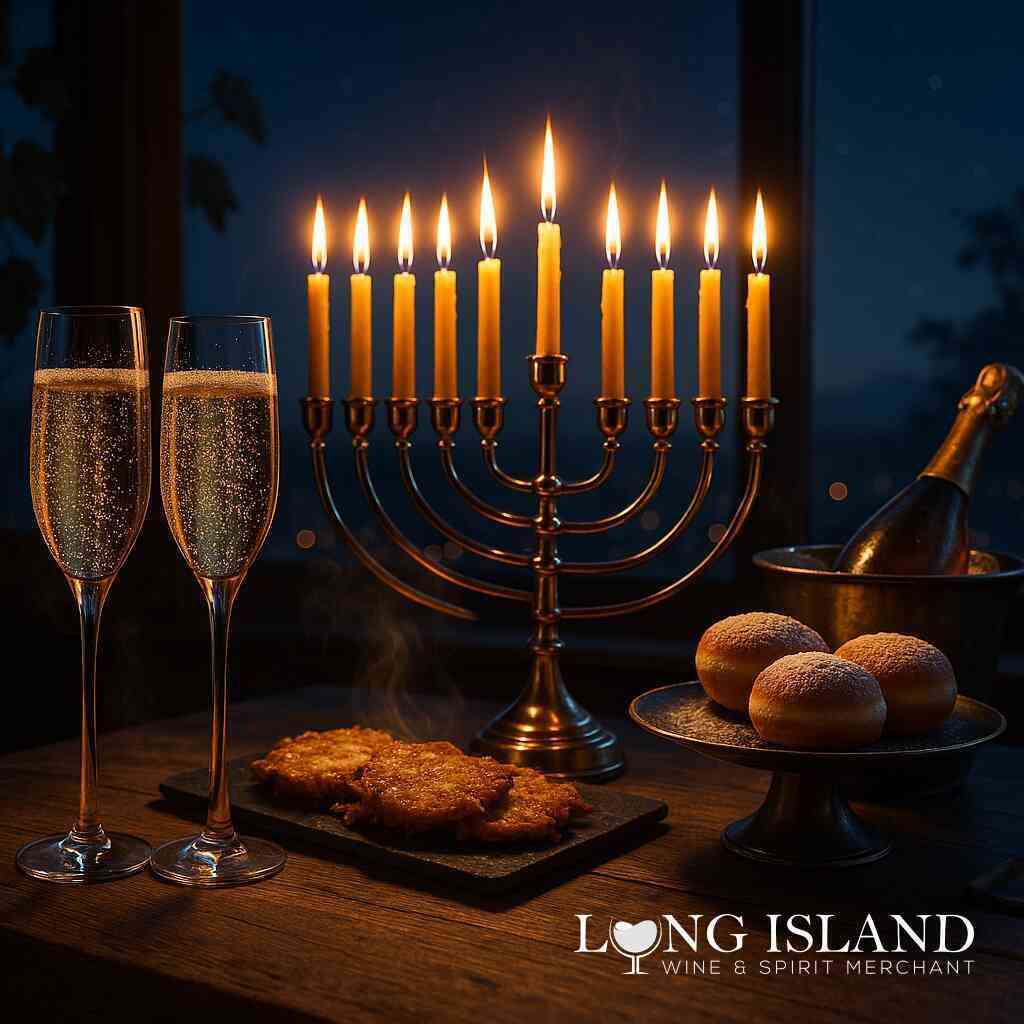
Few sights feel more festive than a flickering menorah beside a flute of perfectly chilled bubbles. Sparkling wine’s shimmer mirrors the candlelight and its lively acidity refreshes the palate between bites of latkes, brisket, or sufganiyot. This guide breaks down the major kosher-certified styles, explains how to read dosage levels, and offers practical tips for serving and storing so that each of the eight nights feels distinct and memorable.
1. Understanding Kosher Sparkling Wine
Kosher production follows the same winemaking science as any high-quality cuvée, with one key difference: every stage that involves handling or equipment must be performed or supervised by observant Jews. Beyond that requirement, producers still choose between the tank method, traditional method, or ancestral-style fermentation. Modern wineries in Italy, France, the United States, and Israel now release kosher labels that stand shoulder-to-shoulder with mainstream benchmarks.
Certification Symbols to Know
- OU – Orthodox Union, widely recognized in North America.
- OK – OK Kosher Certification, often shown as OK or a stylized K.
- Star-K – A star with the letter K inside, headquartered in Baltimore.
- Badatz (Jerusalem) – The preferred seal for many strictly observant households.
Look for these marks on the back label rather than relying on the front branding alone. If multiple seals appear, any one of them usually suffices for Hanukkah observance.
2. Decoding Dosage: Brut, Extra-Dry, Demi-Sec
Sweetness in sparkling wine is adjusted after the second fermentation by adding a small blend of wine and grape sugar, called the dosage. The amount of residual sugar left in the bottle determines both texture and food compatibility:
| Style | Residual Sugar (g/L) | Flavor Impression | Best Hanukkah Pairing |
|---|---|---|---|
| Brut Nature | 0–3 | Bone-dry, mineral, brisk | Herbed potato latkes, smoked salmon toppings |
| Extra Brut | 0–6 | Taut yet slightly rounder | Roasted vegetable sides, light cheese boards |
| Brut | 0–12 | Classic dry balance | Brisket, mushroom kugel, fried chicken schnitzel |
| Extra Dry* | 12–17 | Off-dry fruitiness | Sweet-and-savory tzimmes, cinnamon-apple latkes |
| Demi-Sec | 32–50 | Noticeably sweet | Jelly-filled sufganiyot, honey desserts |
*Despite the name, Extra Dry is sweeter than Brut. That quirk can confuse shoppers, so always double-check the numbers if you seek a specific profile.
3. Key Sparkling Regions Offering Kosher Bottlings
Italian Prosecco (Tank Method)
• Glera grapes pressed gently to protect floral aromatics.
• Rapid, chilled tank fermentation locks in green apple and pear notes.
• Light pressure makes Prosecco a friendly welcome wine while guests gather around the menorah.
French Champagne (Traditional Method)
• Long aging on lees supplies brioche, almond, and fine mousse.
• Kosher cuvées often rely on Chardonnay and Pinot Noir from premier-cru villages.
• Brut styles shine with rich dairy dishes like sour-cream latkes.
American Coastal Cuvée
• Cooler Pacific nights build acidity in Chardonnay and Pinot vineyards from Sonoma, Mendocino, and Monterey.
• Traditional method plus shorter lees aging yields vibrant citrus-driven bottles perfect for modern palates.
Spanish-Inspired American Cava
• Producers in California’s Central Coast mimic Catalan blends of Macabeo and Xarel-lo.
• Extended maturation creates nutty depth well suited to slow-braised brisket.
Israeli Rosé Bubbles
• Syrah and Grenache from the Judean Hills deliver spice and red-berry fruit.
• A flash of sweetness in some cuvées offsets salty fried foods common during Hanukkah.
4. Night-by-Night Pairing Roadmap
Consider opening a different style each evening to keep the celebration evolving:
- Night One – Brut Prosecco: A crisp opener, easy for all generations.
- Night Two – California Extra Brut: Elevates herb-seasoned latkes without stealing the show.
- Night Three – Blanc de Blancs Champagne: 100 % Chardonnay delivers elegant minerality beside lemon-dill salmon.
- Night Four – Rosé Cava: Vivid color echoes spinning dreidels; great with paprika chicken.
- Night Five – Demi-Sec Moscato: Acts as both drink and dessert when sufganiyot take center stage.
- Night Six – Vintage Champagne: For the longest evening, a bottle with cellar age encourages storytelling.
- Night Seven – Israeli Brut Rosé: A nod to the homeland’s modern winemaking prowess.
- Night Eight – Brut Nature Grower Sparkling: Finish bright and laser-focused, reinforcing hope for the year ahead.
5. Serving and Storage Essentials
Chill to the Correct Temperature
- Tank-method Prosecco: 40–44 °F (4–7 °C)
- Traditional-method Brut: 44–48 °F (7–9 °C)
- Vintage Champagne or older cuvées: 50 °F (10 °C) to reveal evolved aromas
Plunge the bottle in an ice-water bath for 20 minutes if time is tight. Avoid the freezer; sudden crystal formation can dull mousse and risk breakage.
The Quiet Pop
Keep a thumb over the cork, twist the bottle—not the cork—and let the gas escape with a hiss rather than a loud bang. The softer release protects delicate aromas and prevents overflow at the table.
Glassware Choices
- Flute: Retains effervescence longest; ideal for light, floral Prosecco.
- Tulip: Widens slightly at mid-bow to showcase complex Champagne aromas.
- White-wine stem: Excellent for aged or oxidative styles where bouquet matters more than bubbles.
Leftover Preservation
A tight sparkling-specific stopper locks in pressure for up to 48 hours in the refrigerator. If only a splash remains, pour it over fresh berries or whip it into sabayon for tomorrow’s breakfast.
6. Matching Sparkle to Classic Hanukkah Foods
Latkes
• Brut Nature or Extra Brut: Cuts through oil and enhances crisp edges.
• Add smoked salmon and dill? Choose Blanc de Blancs for citrus lift.
Brisket
• Brut Champagne: Tannin-free but structured enough to stand alongside long-cooked beef.
• Pepper-crusted versions marry well with Pinot Noir-heavy rosé Champagne.
Sufganiyot
• Demi-Sec: Mirrors the jelly’s sweetness while bubbles cleanse the palate.
• For chocolate-filled doughnuts, try a richer Italian Asti Spumante.
Kugel
• Sweet noodle kugel invites Extra Dry Prosecco, whose subtle sugar matches raisins and cinnamon.
• Savory onion kugel prefers Brut, especially one with gentle lees contact.
7. Sustainable and Vegan Considerations
Many sparkling houses now highlight low-intervention farming, lightweight bottles, and plant-based fining agents. If vegan status matters, check for bentonite clarification on the tech sheet or a “vegan” notation near the kosher symbol. These details reinforce the holiday’s emphasis on ethics and mindful celebration.
8. Final Thoughts
Sparkling wine is more than a toast; it is a sensory echo of Hanukkah’s themes—light, renewal, and shared joy. By understanding dosage, terroir, and service technique, hosts can transform routine pours into eight distinct experiences. Whether uncorking a brisk Brut Nature on the first night or ending with a honeyed Demi-Sec, the steady rise of bubbles becomes a tangible reminder that small sparks can illuminate even the darkest season.
May your menorah glow brightly and your glasses sparkle with intention throughout all eight nights.
Advanced Guide to Sparkling Wines During Hanukkah


Comments
Post a Comment